


3-minute read

Cynthia B. Kaye
Early Education Advocate | CEO, Alive Studios

A Response to “Kindergartners’ Math and Reading Scores Can Predict Their 3rd Grade Performance”
Recently, I read an article titled Kindergartners’ Math and Reading Scores Can Predict Their 3rd Grade Performance by Sarah Schwartz of EducationWeek, and it stopped me in my tracks.
The article shared some sobering data: children who start kindergarten behind in reading and math often continue to struggle through 3rd grade. For some students, the window to catch up starts closing far too early.
As an early education advocate, I believe this is a call to engage children earlier, especially our 3-, 4-, and 5-year-olds. These early years are not just preparation for school. They are the foundation for confidence, curiosity, and future success.
As someone who has spent years focused on early learning, I know how important those first school experiences are. But I also know something else: young children are capable of incredible growth when learning feels joyful, meaningful, and engaging.
I think about my own children and how excited they got when they experienced the magic of Disney World. Their eyes lit up. They were fully engaged. They were curious, excited, and ready to explore.
And I found myself asking: Why can’t learning feel magical like that?
Why can’t we equip teachers with tools and resources that make children excited to enter the classroom?
Why can’t instructional time feel like an adventure, where children learn foundational reading and math skills through joyful, memorable experiences?
This is the kind of learning environment I believe our youngest scholars deserve.
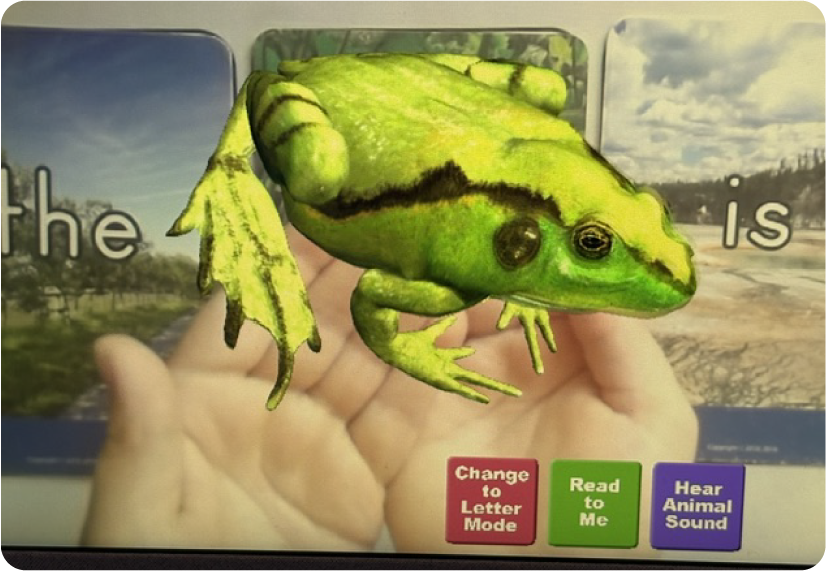
Imagine a classroom where augmented reality zoo animals come to life right in front of children. These animals become their learning friends. They guide children on a journey through letters, sounds, numbers, and problem-solving.
Children are not just watching or listening. They are participating, moving, laughing, wondering, and learning.
This kind of engagement matters.
When children feel excited about learning, their confidence grows. They begin to see themselves as capable readers, thinkers, and problem-solvers. They walk into kindergarten and 1st grade with stronger foundations and with the belief that learning is something they can love.
The data in this article is a reminder that early intervention is critical. But it is also a call to action.
We cannot wait until children are struggling in 3rd grade to respond. We must begin earlier. We must support teachers with innovative tools that make instruction effective, joyful, and unforgettable.
Reading this article encouraged me even more to continue creating, innovating, and advocating for the resources teachers need to engage young learners.
Because our little scholars need wonder.
They need confidence.
They need learning experiences that help build the foundations for a successful future.
And yes, it is good to have a little magic, too.
Thank you to Sarah Schwartz and Education Week for spotlighting this important data and reminding us why the early years matter so much.
I’d love to hear your thoughts on this article!