

4-minute read

Cynthia B. Kaye
Early Education Advocate | CEO, Alive Studios
The latest news is hard to ignore.
Across the country, we are not just talking about learning loss anymore. We are talking about a learning recession.
Reading scores are not where they need to be. Too many children are moving through the early grades without the foundational literacy skills they need. And by the time students reach upper elementary, middle school, or high school, the gaps become harder and more expensive to close.
This should concern all of us.
But it should also push us to ask better questions.
A recent opinion piece by Shawn Datchuk raised an important point: even when schools adopt new reading textbooks and states move toward evidence-based reading laws, children’s reading scores are not automatically rising.
That should make all of us pause.
Maybe the next question is not only: Are we using the right materials?
But also: Are we implementing instruction in a way young children can actually engage with, remember, and apply?
For years, many education conversations have centered around:
What curriculum should we buy?
What program should we implement?
What intervention should we add?
Those questions still matter.
But I believe the conversation is evolving into something deeper:
What actually gets young children engaged enough to learn?
Because the reality is this:
Children do not learn deeply from what simply passes in front of them.
They learn from what captures their attention, sparks their curiosity, activates emotion, and creates meaningful experiences they remember.
And in early childhood especially, engagement is not separate from learning.
It is part of how learning happens.
Across the country, states are investing heavily in Science of Reading initiatives, literacy coaching, dyslexia screening, high-quality materials, and evidence-based instruction.
That work matters.
We absolutely need explicit, systematic, research-based reading instruction.
But the Science of Reading gives us the instructional foundation.
Implementation determines whether that instruction reaches the child.
And for young learners, implementation has to include attention, emotion, movement, language, participation, and meaningful experience.
That is why I believe we need to ask:
• How do we implement the Science of Reading in a way that truly reaches our youngest learners?
• How do we make instruction clear, structured, and evidence-based — but also memorable?
• How do we make sure state-approved lists and literacy initiatives leave room for proven supplemental solutions that help teachers engage children and improve outcomes?
Because sometimes the question is not only, “Are we using the right list?”
The question is, “Are we giving educators access to every proven tool that can help children learn?”
Especially in Pre-K and Kindergarten, we cannot separate instruction from attention, emotion, movement, language, and participation.
Young children are not passive learners.
They learn through interaction.
Through conversation.
Through wonder.
Through multisensory experiences.
Through moments that make them want to lean in and participate.
That idea has stayed with me for years.
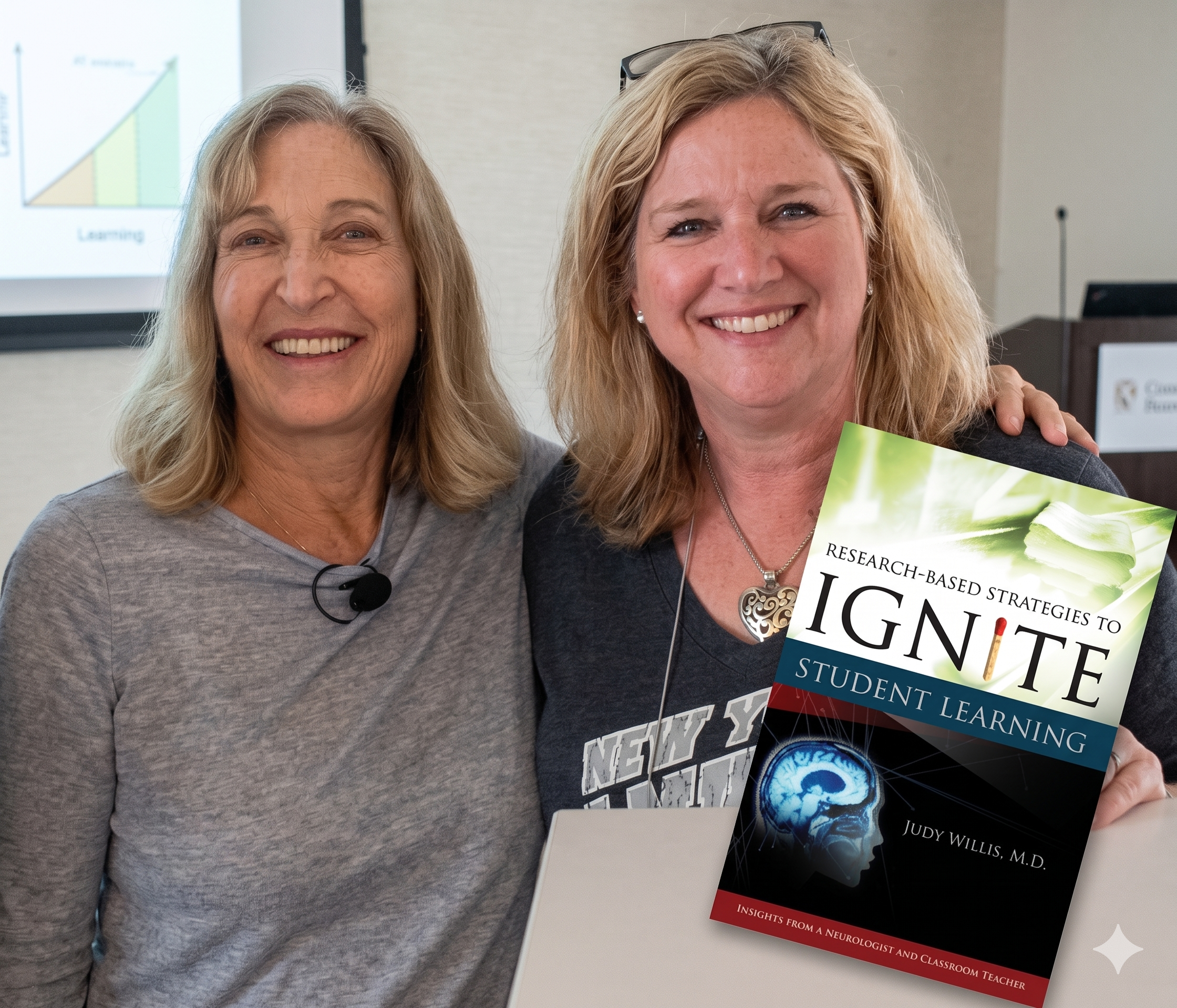
I had the opportunity to study under Dr. Judy Willis, a neurologist and educator, and one of the biggest takeaways I carried with me was this:
“Young children learn differently when they are emotionally connected to the experience. When curiosity and wonder are activated, attention increases. And when attention increases, the opportunity for learning and memory grows.”
This is especially important right now.
If we are serious about raising literacy outcomes, we have to support teachers with instruction children can actually remember.
Instruction that children experience.
Instruction that activates curiosity.
Instruction that strengthens neural pathways by engaging multiple senses.
Instruction that helps children connect emotionally to language, letters, sounds, stories, and discovery.
The future of early literacy cannot only be about delivering information more efficiently.
It must also be about creating learning experiences children remember.
In this learning crisis, we need both.
Evidence-based instruction AND learning experiences children never forget.
Teachers can feel the difference when children are fully engaged. When they light up. When they participate. When they move, respond, laugh, wonder, and connect with learning.
Those are not distractions from instruction.
Those moments are often the doorway into deeper learning.
At the same time, educators are overwhelmed.
They are navigating increased expectations, staffing challenges, rising student needs, and constant initiatives. The best early learning tools today should not add more burden to classrooms.
They should create more connections. More participation. More joy. More opportunities for children to experience success.
That’s why I believe the future of early education belongs to approaches that successfully combine:
research-based instruction, brain science, meaningful engagement, and emotionally memorable learning experiences.
We should not have to choose between rigorous instruction and engaging learning experiences.
Young children deserve both.
Because in the end, young children may not remember every lesson we teach… but they will remember how learning made them feel. And those feelings can shape confidence, curiosity, and a lifelong relationship with learning itself.
I’d love to hear your thoughts on this article!