

5-minute read

Cynthia B. Kaye
Early Education Advocate | EdTech Innovator | CEO, Alive Studios
There’s a lot of conversation right now around supporting English Learners (EL) in early literacy. And for good reason.
These students are often asked to perform a cognitive “triple jump.” Simultaneously, they are:
• learning a new language.
• building brand-new vocabulary.
• developing foundational reading skills.
Common wisdom says we just need to “engage” them. But after years in this space, I’ve seen the truth: Engagement alone isn’t enough. Isolated skill practice isn’t enough, either.
True growth happens at the intersection of High Engagement and Structured Literacy.
The ESL Case Study: Consistent, Measurable Gains
I recently analyzed data from Katie Bostian, a dedicated 1st Grade ESL Teacher at Knollwood Elementary (Rowan-Salisbury Schools). Katie worked with two small groups of English Learners using a structured, multi-sensory approach with Letters alive®.
The results weren’t just “good”, they were transformative. Here is her case study.
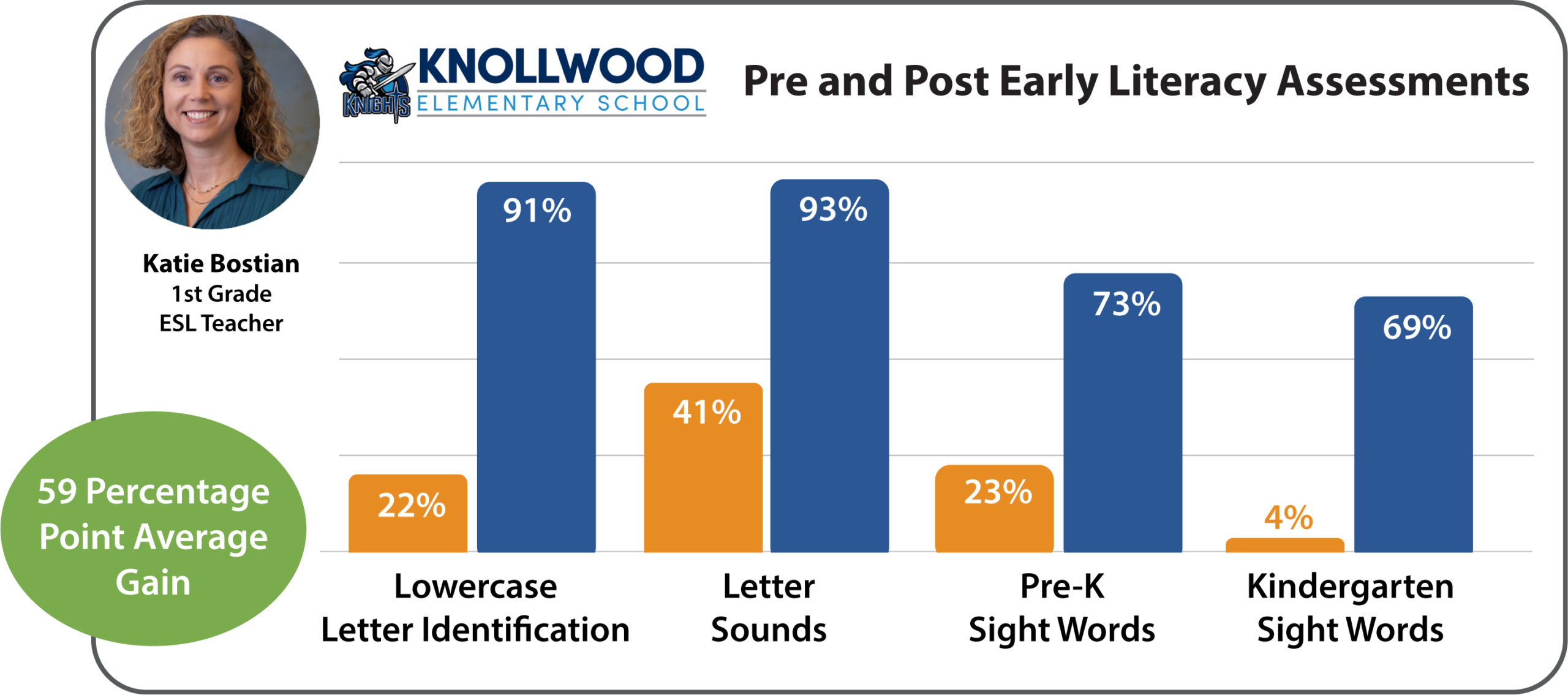
The Growth Patterns (Averages across both groups):
• Lowercase Letter ID: 22% → 91% (+69 percentage pts)
• Letter Sounds: 41% → 93% (+52 percentage pts)
• Pre-K Sight Words: 23% → 73% (+50 percentage pts)
• Kindergarten Sight Words: 4% → 69% (+65 percentage pts)
What is most notable here? The consistency.
Group 1 and Group 2 followed nearly identical growth trajectories. In education, we often see “random acts of improvement,” but this data shows a repeatable outcome. When the method is right, the results follow.
Why It Works: The Science of the “Animal Anchor”
Why did these students jump 65 points in kindergarten sight words while mastering their letter sounds? It comes down to Dual Coding, making the abstract tangible.
With Letters alive®, a letter isn’t just a “squiggle” on a page. It connects a 3D animal that students can see, hear, and interact with.
The Visual: They see a 3D letter and an animal that begins with that letter (Real-world imagery).
The Auditory: They hear the letter name, the sound represented by the letter, the animal name, and they hear the sound the animal makes. They can also hear a complete sentence read aloud, featuring the animal.
The Kinesthetic/Tactile: They can act out the animal’s movement and trace the letter.
The animals in Letters alive become “Cognitive Anchors.” When a child struggles to remember the /a/ sound, they don’t just search their memory for a symbol; they remember the experience of the animal and their animal friend’s name. This reduces the “cognitive load”.
Moving from Skill to Application
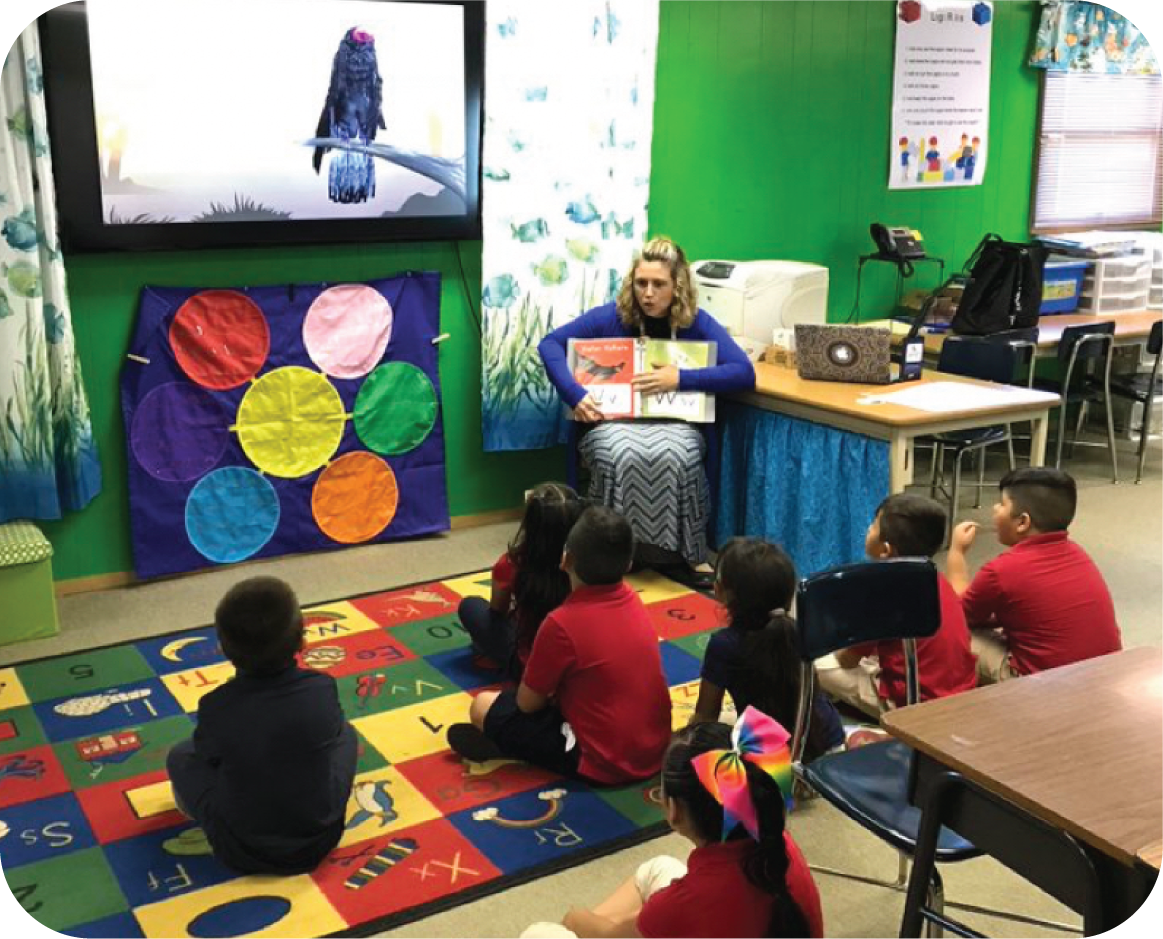
Katie’s instruction didn’t stop at sounds. Her students moved immediately into building words, creating sentences, and discussing habitats.
This is the “secret sauce” for Language Learners: Oral Language Development.
The 3D animals provided the “spark” for conversation. Because the students were captivated by the technology, they wanted to talk about what they were seeing. That oral practice bridged the gap between recognizing a letter and reading a full sentence.
The Bottom Line
Katie’s data reinforces Alive Studios’ deep-seated belief: Engagement is a superpower, but only when it is tethered to multisensory, purposeful, structured literacy.
“If you teach phonics, in any situation: pre-K, K, remediation, first grade, ESL, or primary, you need to check this out!” ~ Kaite Bostian
When students are both captivated and supported, the “achievement gap” begins to close. We don’t just see what they are capable of, we see them thrive.
🧠 Quick FAQ: The Science Behind this ESL Success
Q: How does this align with the Science of Reading (SOR)?
A: SOR emphasizes explicit, systematic instruction. We deliver this through a “Multi-Sensory” lens. By using Dual Coding, we help students map phonemes to graphemes more efficiently—the core of orthographic mapping.
Q: What is Dual Coding, and why is it trending in Early Education?
A: Dual Coding is an evidence-based cognitive theory that suggests we process information through two distinct channels: visual and verbal. When a child receives a “double dose” of information (seeing an image while hearing the word), it creates two separate memory traces in the brain. For Pre-K and Kindergarten learners, this “visual anchor” makes abstract concepts—like letter sounds or new vocabulary—tangible and easier to store in long-term memory.
Q: Why is “Consistency” so important for EL students?
A: EL progress can often feel uneven. When we see identical 60+ point gains across different groups, it proves that a multimodal approach stabilizes the learning process. It makes success a standard, not an exception.
Q: Does this apply to Math, too?
A: Absolutely. The same Dual Coding principles apply to Numeracy. Pairing 3D “Math Animals” with abstract numbers helps students build “Number Sense” through those same visual anchors.
Q: How does Dual Coding specifically benefit ESL and Multilingual learners?
A: For children learning English, verbal input alone can be overwhelming. Dual Coding acts as a bridge to comprehension. By pairing a real photo or a 3D animal with spoken language, we reduce the “cognitive load”—the mental effort required to process information. This builds immediate confidence, allowing students to participate in the lesson through visual cues even before they have mastered the English vocabulary.
Q: What does Dual Coding look like in a Science of Reading (SOR) classroom?
A: In an SOR-aligned classroom, Dual Coding is most effective during phonological awareness and vocabulary routines. For example, instead of just showing the letter “A,” a teacher uses a multi-sensory approach:
Visual: Show a 3D image or real photo (e.g., an Apple).
Auditory: Say the letter sound (/a/).
Kinesthetic: Have the children mimic an action (e.g., “biting the apple”). This “triple-threat” approach ensures the brain maps the sound to the symbol much faster than traditional methods.
Q: What is the latest research supporting Multimodal Learning for 4-to-8-year-olds?
A: Peer-reviewed studies from 2019–2023 (including Wong & Samudra and Frontiers in Psychology) consistently show that multimodal input,using sight, sound, and motion, accelerates language acquisition. Research indicates that “Bilingual Dual Coding” is transformational because it gives the brain two pathways to meaning, which is essential for bridging a child’s home language with their school language.
Q: How do Alive Studios’ tools, like Letters alive, embody the principles of Dual Coding?
A: Our technology was built on the foundation of cognitive science. When children use Letters alive or the Interactive Zoo Panel, they aren’t just looking at a screen; they are engaging in a full Dual Coding cycle:
They SEE the 3D animal (Visual).
They HEAR the sound and sentence (Verbal).
They ACT out the movement (Kinesthetic).
They REPEAT the word (Oral Language).
This creates an “unforgettable” learning moment that moves beyond rote memorization into true comprehension.
I’d love to hear your thoughts on this article!