

3-minute read

Cynthia B. Kaye
Early Education Advocate | EdTech Innovator | CEO, Alive Studios
I’ve been listening to a lot of passionate conversations lately, and they all seem to circle around one word: Rigor.
As the Science of Reading (SoR) rightfully takes over elementary education, it’s now knocking on the door of our Pre-K and Head Start classrooms. This has sparked a massive controversy.
On the one hand, we have leaders looking at 67% of our 4th graders who do not read proficiently and saying, “We have to start SoR earlier.” On the other hand, we have early educators who are terrified that “science” means turning our 3–5-year-old classrooms into dry, worksheet-driven drill centers.
Here is my take: We’ve created a false choice. We can actually have both. We can have the science of reading in pre-k while creating a multi-sensory, joyful learning experience that engages our little ones.
Reacting to the Evidence
To stay grounded in this conversation, I’ve been looking closely at the guiding voices in our industry. Here are three perspectives I’m reacting to right now:
1. The Reading League’s “Science of Reading: Defining Guide.” The Reading League defines SoR as a “vast, interdisciplinary body of scientifically-based research.” I love this framing because it reminds us that this isn’t a single curriculum, it’s a wealth of evidence. As leaders, our job is to take that “vast body of evidence” and find ways to make it physically accessible and developmentally “sticky” for the 4-year-old brain.
2. NAEYC’s Position on Developmentally Appropriate Practice (DAP) I’m also reacting to NAEYC’s emphasis on “joyful, child-centered learning.” There is a fear that “rigor” kills “joy.” I believe multi-sensory learning experiences, like 3D Augmented Reality, are the ultimate tool for bridging the gap. It allows us to preserve the joy of exploration and discovery while meeting the rigorous standards that our states require.
3. The “Pre-K Crisis” Recent articles in Education Week highlight a heartbreaking trend: record-high teacher burnout. We cannot ask our educators to “do more with less.” We must provide them with modern, supplemental tools that make their jobs easier, more effective, and, dare I say, more magical.
Bridging the “Engagement Gap”
I founded Alive Studios because I saw a way to solve this “Engagement Gap.” We realized that for the Science of Reading to work in Pre-K, it needs to be multi-sensory, exciting, novel, and include play.
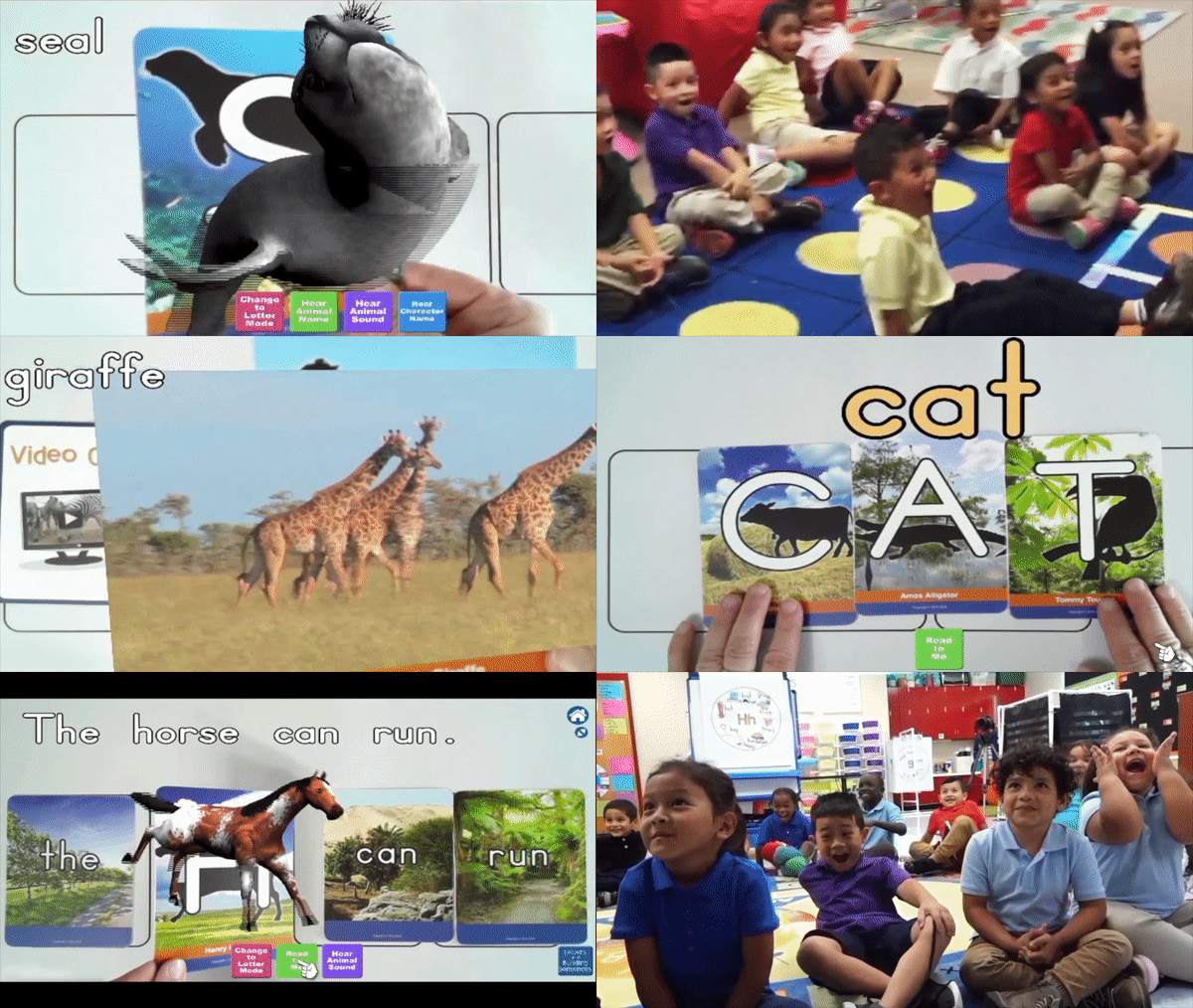
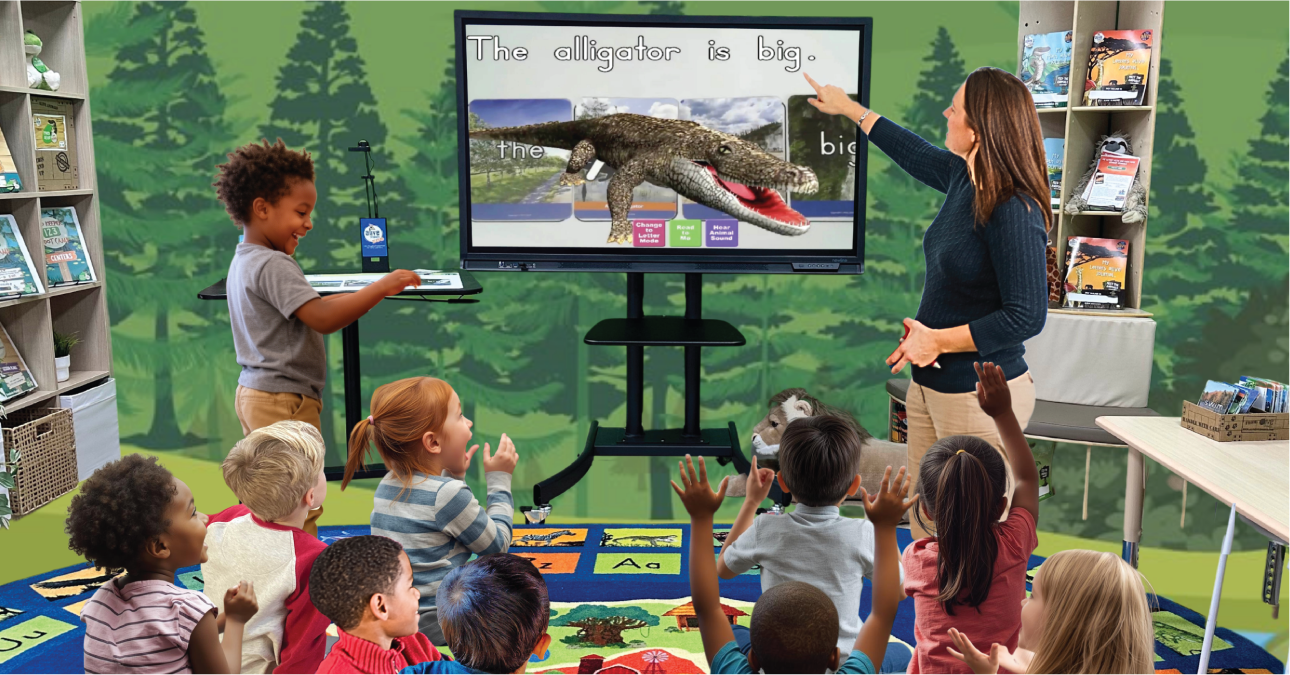
By using patented 3D augmented reality technology, we can turn a standard phonics lesson into an interactive experience. When a child sees a letter jump off a card and turn into a 3D animal they can “interact” with, they aren’t just playing—they are engaging in multi-sensory encoding. This is how we build foundational literacy and numeracy skills in a way that stays with them for a lifetime.
From Gaps to Gains
I know the headlines are full of budget delays and funding shifts. Education spending is slow right now because leaders, rightfully so, need proven ROI. This is why the conversation must move beyond “tools” and toward evidence-based outcomes.
Independent Research shows that when we move from passive instruction to this type of innovative, multi-sensory experience, we can see a measurable shift in foundational skills in as little as 90 days. We also have Case Studies with similar successes.
Whether a district is looking at school-wide literacy initiatives or targeted intervention for at-risk learners, this fact remains the same: with the right engagement tools, we can turn “Gaps into Gains” faster than we ever thought possible.
Let’s move past the controversy of teaching the Science of Reading in Pre-K and start talking about how to make it unforgettable for our little learners.
Q&A: How Augmented Reality Complements The Science of Reading
1. How can we implement the Science of Reading AND make it joyful for our Pre-K students?
Implementation shouldn’t mean “pushing down” 1st-grade desk work. Instead, it should include multi-sensory encoding. By using innovative experiences like 3D Augmented Reality, children can interact with phonemes and letters in their physical space. This anchors the research-based “Science” in a “Joyful” environment that is developmentally appropriate for 3- to 5-year-olds.
2. Is Augmented Reality (AR) considered a “Research-Based” tool for early literacy?
Yes. When AR is used to facilitate multi-sensory learning, it aligns with the Science of Reading’s emphasis on dual-coding (visual and auditory processing). Patented systems like Alive Studios’ have shown in independent case studies that this “active” engagement can move the needle on foundational skills in as little as 30 days, providing a high ROI for district leaders.
3. How does Alive Studios support Special Education and ELL students?
For students with IEPs or those learning English as a second language, traditional oral drills can be a barrier. 3D AR provides a “Cognitive Reset,” offering a visual anchor for sounds. This makes it an ideal supplemental tool for Tier 2 and Tier 3 interventions, helping struggling learners in Pre-K through 2nd grade catch up by making abstract concepts tangible.
4. Is Alive Studios eligible for Title I or Head Start funding?
Absolutely. Because our programs are evidence-based supplemental solutions that align with state literacy acts and the Science of Reading, they are a defensible and “Audit-Proof” use of Title I, ESSER, and Head Start funds. Our classroom solutions are designed for easy implementation, helping directors spend their budgets effectively.
5. Can this technology help with teacher burnout and retention?
Yes. One of the biggest drivers of burnout is the pressure to deliver results with limited engagement. Our Interactive Zoo Panels and other resources are not only engaging for students, they are also engaging and easy-to-use for teachers, making teaching much more enjoyable and rewarding.
I’d love to hear your thoughts on this article!