

6 Independent Studies that Prove Augmented Reality is an Equity Lever for All – Especially Special Education and ELL
5-minute read

Cynthia B. Kaye
Early Education Advocate | EdTech Innovator | CEO, Alive Studios
“Innovation” can be a tired word in education. “Impact” is what we’re actually looking for.
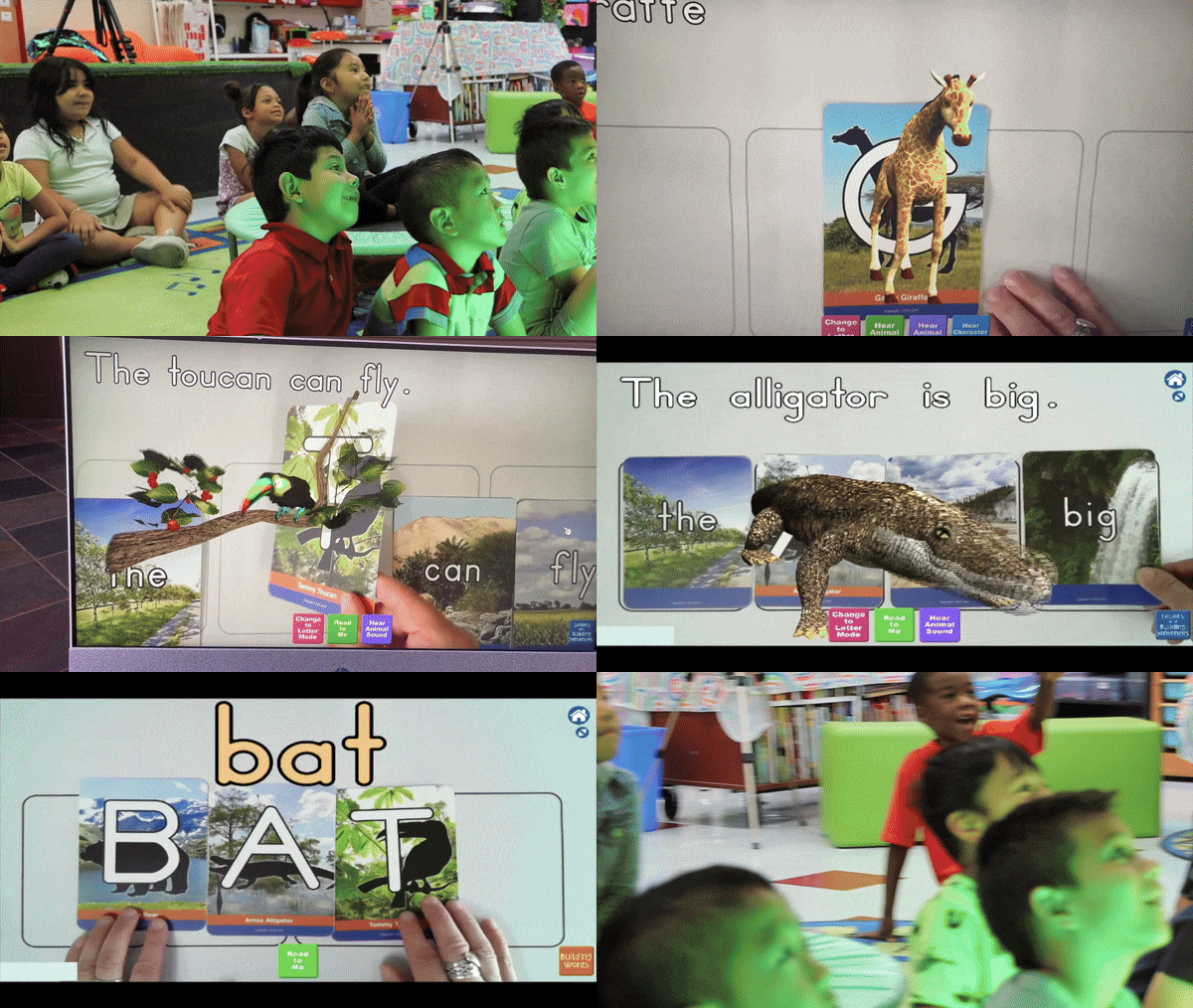
Fifteen years ago, my husband and I began a mission to help our two adopted sons learn to read. We discovered that traditional 2D print was a barrier to their success. This personal journey led us to develop an instructional method using Augmented Reality (AR), a method so unique it earned a U.S. Patent.
What is the Impact of Augmented Reality on Early Literacy and Numeracy?
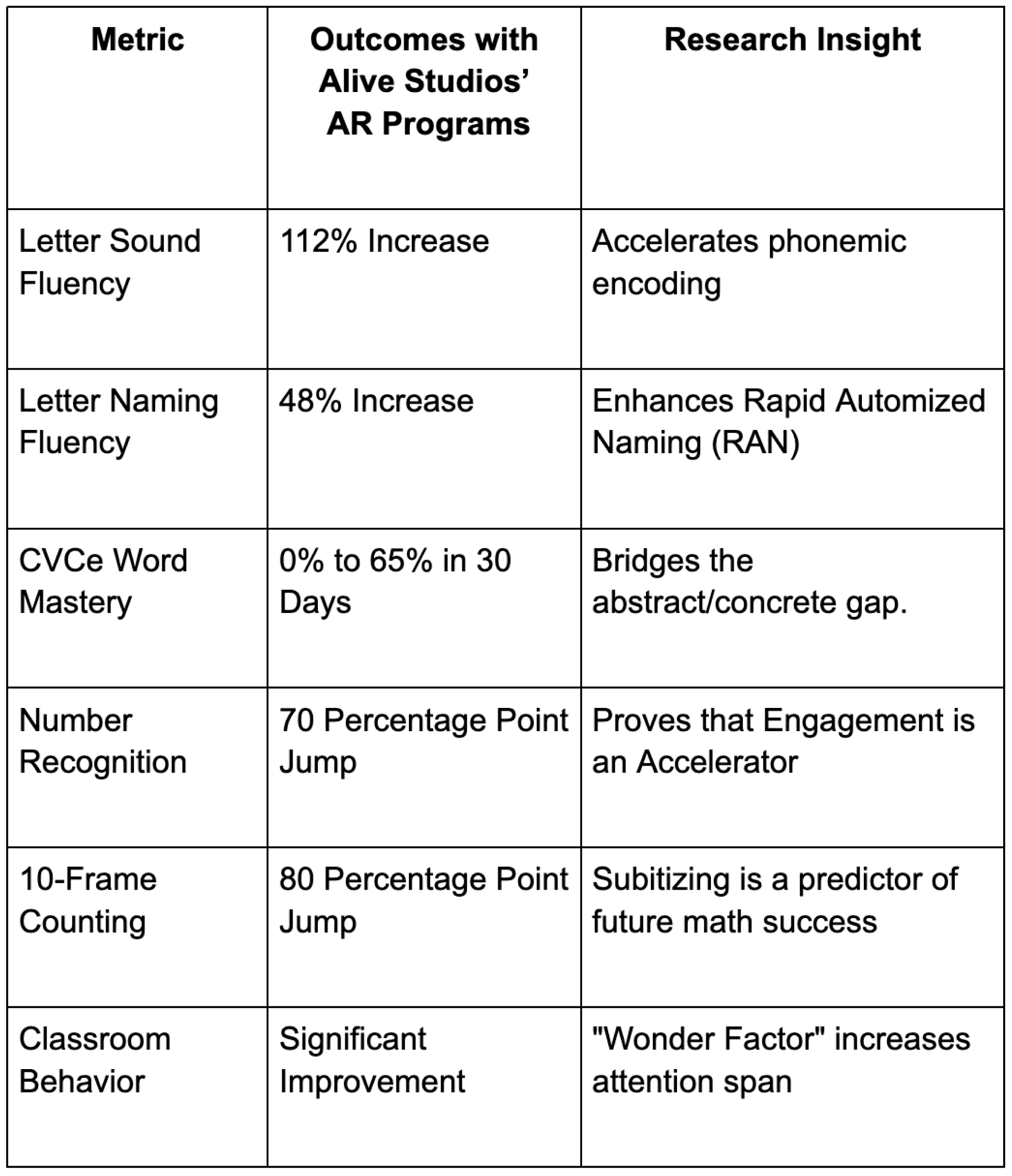
According to six independent studies and our own case studies, AR acts as a multisensory anchor and accelerator for foundational skills.
Here is a breakdown of how that performance translates to the classroom:
View the Full Research Portfolio: 6 Independent Studies
Real-World Impact: Literacy and Numeracy Breakthroughs
While academic studies are vital, real-world results move the needle. We’ve seen “stagnant” classrooms transformed into hubs of energy and success in under a month.
In Special Education:
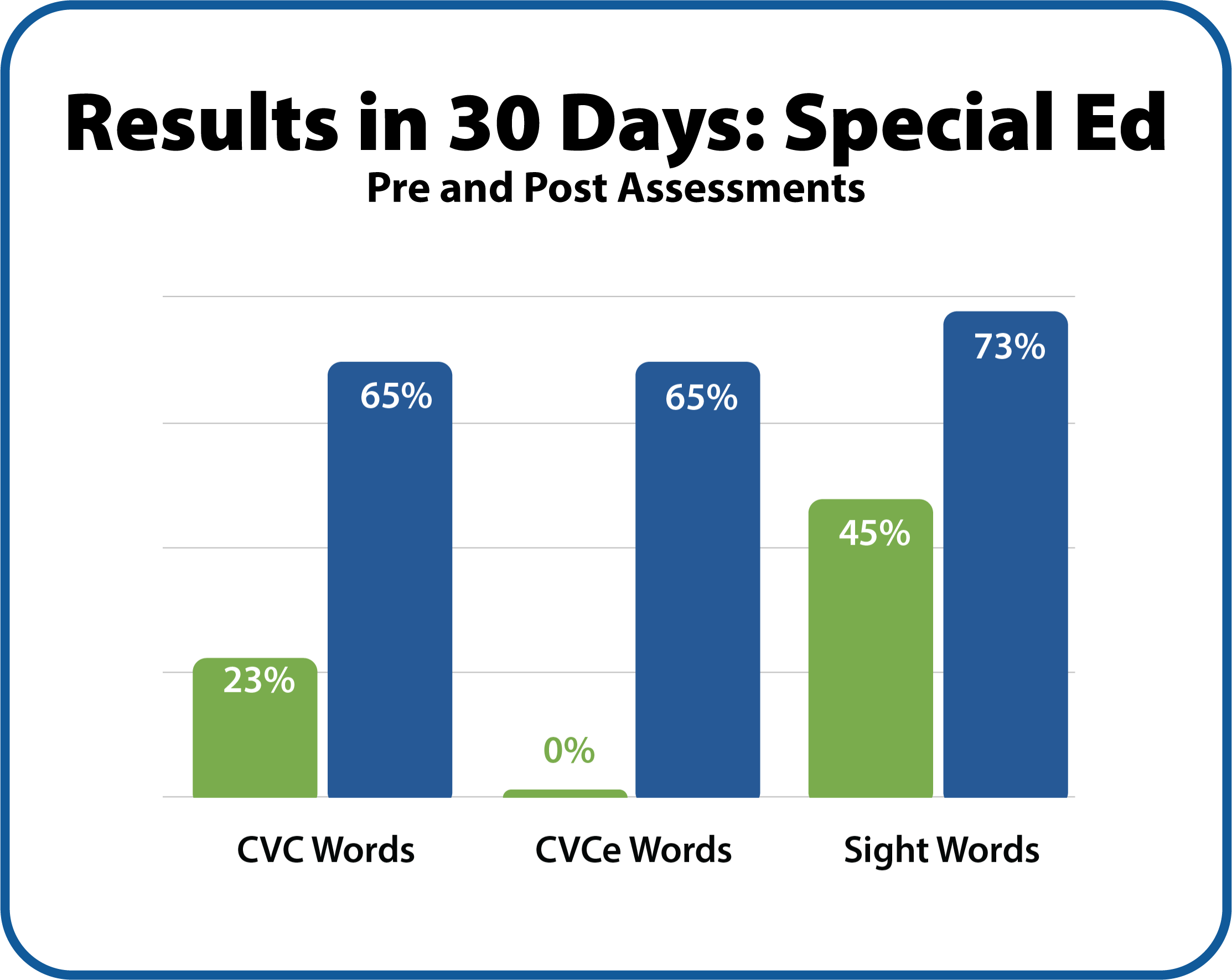
Rachel, a 1st-grade special education teacher, used our AR-based Letters alive® supplemental program and saw her students move from 0% to 65% in CVCe word mastery in just 30 days.
“I had to completely redo their IEP goals! My kids are obsessed!”
~ Rachel, Special Education Teacher
In Title 1 ELL Kindergarten:
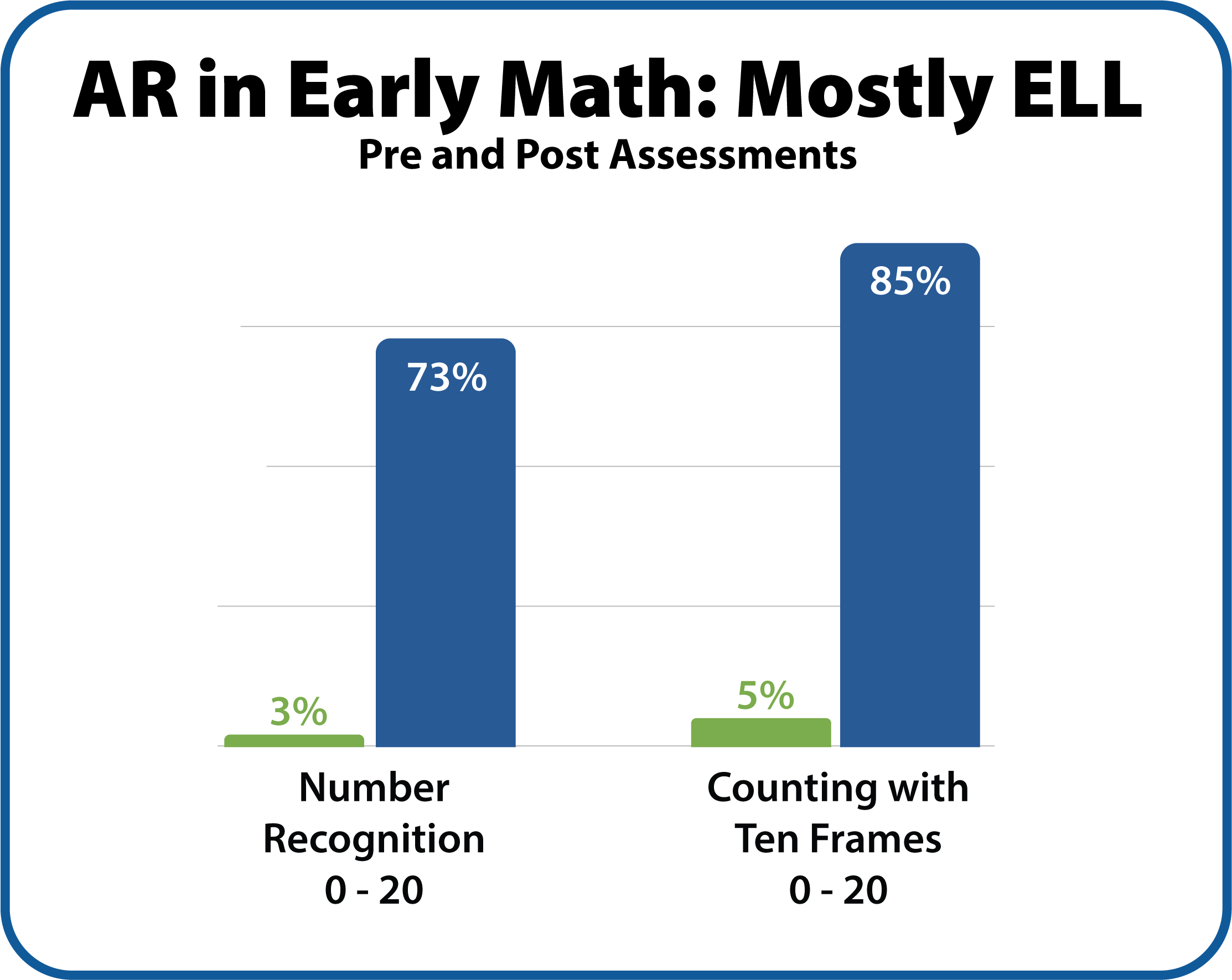
Mr. Greg Warren’s Kindergarten classroom consists of predominantly ELL students at a Title 1 school. They arrived with almost no foundational number sense. In just 26 days of using our AR tools:
- Number Recognition (0–20): Jumped from 3% to 73% (a 70-percentage-point increase).
- 10-Frame Counting: Soared from 5% to 85% (an 80-percentage-point increase).
Why AR is the Ultimate Inclusive Approach
In a modern classroom, “inclusive” means meeting a wide range of needs simultaneously. For children in Special Education or those learning English, cognitive load reduction is the priority.
- Standardized Phonemic Models: Using computer-assisted voice (not regional dialects) provides a consistent phonemic model for letters and numeracy vocabulary, benefiting ELL and native speakers alike.
- Visual-Spatial Development: Research shows that AR specifically develops visual-spatial skills, which are essential for number sense and letter orientation.
- Social Integration: AR enables students with special needs to participate in the same high-level “Wonder Factor” as their peers, reducing the stigma often associated with traditional interventions.
Overcoming “Systems Friction” in District Infrastructure
To be an effective MTSS Tier 1 or Tier 2 support, we’ve ensured our platform is built for the operational reality of school districts:
- Connectivity Independent: It does not need internet access to function, perfect for classrooms with spotty Wi-Fi or high security needs.
- Teacher-Aligned: Supports the teacher at the front of the room; it doesn’t replace the human connection.
- Science of Reading Mapped: Aligned with ESSA, Title I, and state frameworks.
A Final Thought
I know how high the stakes are for your districts right now. We all want the same thing: to see every child, regardless of their starting point, gain the confidence that comes with literacy and numeracy. We’ve spent 15 years refining this because we believe these kids deserve a bridge that actually works for them. If you’re looking for a way to support your teachers and reach your most vulnerable learners, let’s start a conversation. We’re all in this together.
Frequently Asked Questions about Augmented Reality in Early Education
How does Augmented Reality enhance the Science of Reading?
Augmented Reality (AR) serves as a multi-sensory bridge that supports the Science of Reading by providing explicit, engaging phonemic models. It helps students connect 3D visual cues with standardized auditory phonemes, accelerating the orthographic mapping process.
How does AR specifically help non-verbal or “timid” learners?
We have seen students who begin the year non-verbal blossom into confident leaders. The interactive nature of AR provides a safe, low-pressure way for children to interact with the lesson. Because the zoo animals we use in our AR-based programs become the students’ friends, they spark a level of emotional engagement that helps children move from “anxious” to “active” participants.
Is Augmented Reality an effective Tier 2 intervention for Special Education?
Yes. As shown in Rachel’s 1st-grade case study, AR can drive CVCe word mastery from 0% to 65% in just 30 days, allowing teachers to reset IEP goals based on accelerated progress.
Does AR technology require a stable Wi-Fi connection in the classroom?
While many AR apps do, our patented method works without an internet connection, ensuring that even Title 1 schools can provide elite-level tech regardless of their building’s connectivity.
How does AR support English Language Learners (ELL)?
AR reduces the cognitive load for ELL students by providing immediate 3D context for new vocabulary and a consistent, neutral phonemic model that removes the barrier of regional dialects.
I’d love to hear your thoughts on this article!